
Best Time to Pour Concrete in Cherokee County, GA
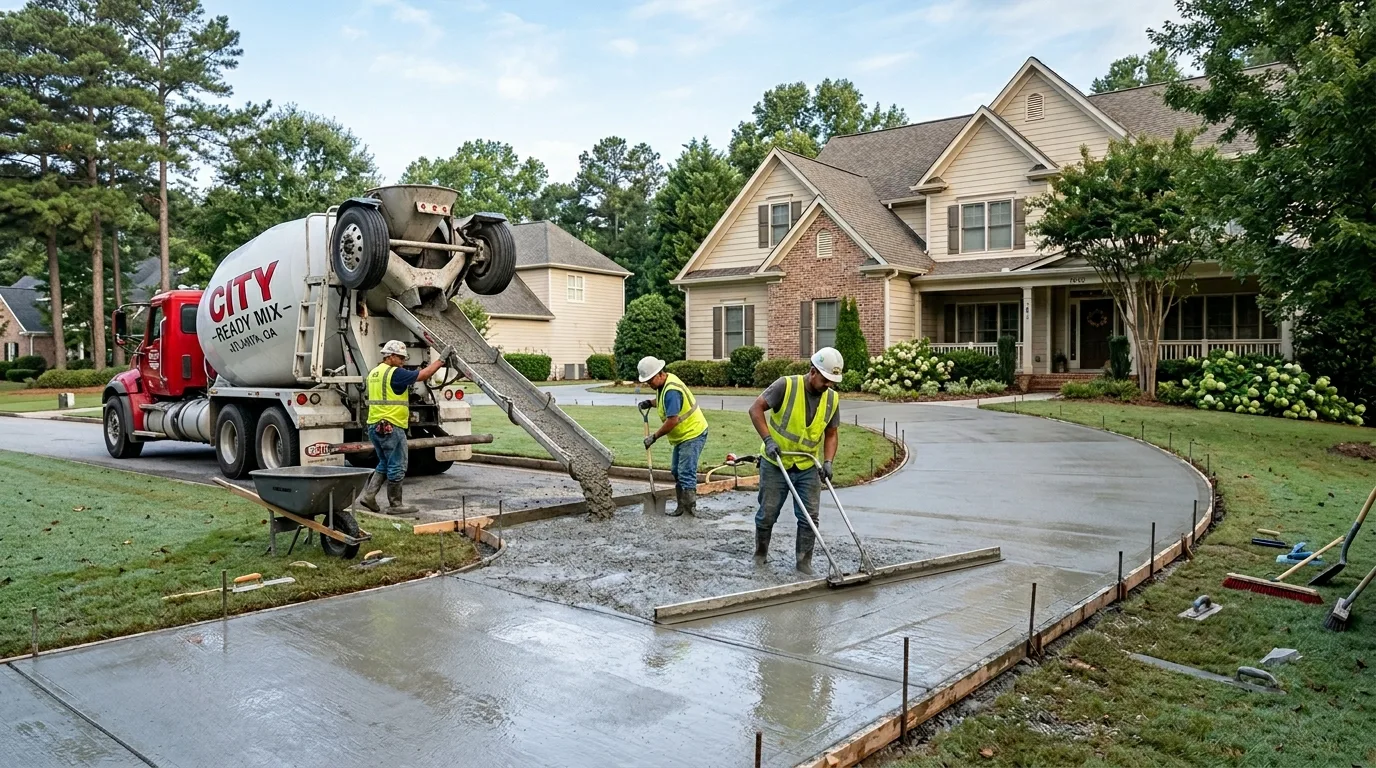
Concrete quality is largely determined before the truck arrives — by the temperature, humidity, and weather conditions on the day of the pour. In Holly Springs and Cherokee County, GA, those conditions vary significantly by season in ways that directly affect how well your concrete cures, how strong it becomes, and how long it lasts.
This guide gives Holly Springs homeowners and business owners a practical seasonal framework for scheduling concrete work — including the months that produce the strongest results, the months that require extra care, and the weather thresholds that determine when pouring is and isn’t advisable.
Schedule Your Holly Springs Concrete Project
Free estimates with seasonal scheduling guidance. Holly Springs Concrete serves all of Cherokee County. Call (888) 376-0955.
Why Timing Matters for Concrete Holly Springs Projects
The chemical reaction that hardens concrete — hydration — is temperature-dependent. At ideal temperatures (50–80°F), concrete hydrates steadily and achieves maximum strength at around 28 days. Too hot, and surface moisture evaporates faster than the interior hydrates, creating a weaker surface layer. Too cold, and hydration slows or stops — concrete that freezes within the first 24–48 hours of curing loses 50% or more of its design strength.
Cherokee County’s climate creates both challenges. Georgia’s hot, humid summers push concrete placement against the upper temperature threshold. Occasional hard freezes in December and January create risk at the lower end. The good news is that Holly Springs’s climate offers extended spring and fall windows with ideal conditions — and knowledgeable contractors can work in the challenging months with the right precautions.
Types / Options: Cherokee County’s Concrete Seasons
Spring (March–May) — Ideal: The best concrete season in Holly Springs. Temperatures in the 55–75°F range produce strong, uniform cures. Humidity levels moderate after February dry-out. Rain risk is present (Georgia’s spring rainfall peaks in March–April), but afternoon rain on a properly cured morning pour doesn’t significantly affect concrete after the first 4–6 hours of set. For stamped concrete specifically, spring temperatures give crews the longest working window for pattern application.
Summer (June–August) — Manageable with precautions: Georgia’s summer heat creates real challenges. When ambient temperatures exceed 85°F, concrete surface paste evaporates moisture faster than the interior can hydrate, causing plastic shrinkage cracking and weakened surface strength. Summer concrete in Holly Springs requires: scheduling pours in early morning (before 10am), using evaporation retardants to slow surface drying, applying curing compound or wet blankets immediately after finishing, and avoiding afternoon pours when possible. Stamped concrete is the most sensitive to summer heat — complex stamp work is best rescheduled to spring or fall if possible.
Fall (September–November) — Ideal: The second-best concrete season, and the preferred window for Cherokee County contractors. September and October temperatures in Holly Springs typically stay in the 60–80°F range — warm enough for strong cures, cool enough for longer working windows on decorative work. Fall humidity is lower than spring, which further benefits the curing process. October is particularly well-suited for large-scale projects (full driveways, full patios) where extended working time matters.
Winter (December–February) — Possible with care: Holly Springs winters are mild by national standards, but December–February average lows of 28–32°F create freeze risk for fresh concrete. Concrete must not freeze during the first 24–48 hours of curing. Winter pours in Cherokee County require: monitoring weather forecasts carefully, using heated water in the concrete mix when temps drop below 40°F, placing insulated curing blankets immediately after finishing, and avoiding pours when temperatures are trending downward overnight. Small crack repairs and minor patching can be done year-round with these precautions; large pours carry more risk in winter.
Practical Uses: Season-Specific Planning for Holly Springs Projects
Scheduling stamped concrete patios: Fall (September–October) is the gold standard for stamped work. Lower temperatures give crew the longest window — sometimes 3–4 hours — for stamping after the pour, versus 1–2 hours in peak summer. Complex multi-pattern or multi-color stamped patios are best booked in September or October. Homeowners in Cedar Valley and Barrett Springs who want precise pattern work should specifically request fall scheduling when they get their estimates in spring or early summer.
New driveways before winter: Many Holly Springs homeowners want new driveways complete before the holiday season. Book early — our October and November slots typically fill by September. A pour in late October or November is fine weather-wise in most years; December carries moderate risk depending on the forecast.
Foundation and slab work tied to construction timelines: New construction slabs can’t always wait for ideal weather windows — GC schedules drive the timeline. We work year-round on foundation and slab work with appropriate precautions, adjusting pour times and curing methods for the season. Winter pours on foundations use heated curing blankets as standard practice.
Concrete repair work: Small crack repairs and localized patching can be done in any season except when temperatures are below 40°F and dropping. Fall and spring are ideal for larger resurfacing projects. Don’t wait until summer to call for an assessment on winter damage — by the time contractors’ schedules open up after peak demand, summer heat creates additional complications.
How It Works: Concrete Curing in Cherokee County’s Climate
Concrete gains strength over time through continuous hydration. At 7 days, concrete typically reaches 70% of its 28-day design strength — enough for normal use (foot traffic after 24 hours, vehicle traffic after 7 days). At 28 days, it reaches full design strength. After 28 days, concrete continues to gain marginal strength for years.
Temperature affects each stage. In optimal 70°F conditions, the 7-day strength curve runs its full course normally. In 95°F conditions, the surface hydration completes faster than the interior — creating a density gradient that makes the surface layer more vulnerable to abrasion and weathering. In 35°F conditions, hydration slows dramatically: concrete may take 14–21 days to reach 7-day equivalent strength. Freeze conditions before 7 days can permanently damage the concrete’s strength profile.
The practical implications for Holly Springs: use fall and spring for large or complex projects; plan summer pours for early morning; don’t attempt large outdoor concrete pours in December without monitoring the 48-hour forecast; call for repairs promptly after winter damage rather than waiting for summer.
Ready to Schedule Your Holly Springs Concrete Project?
We advise on the best timing for your specific project. Free estimates — call Holly Springs Concrete at (888) 376-0955.
Cost Factors: Does Season Affect Concrete Pricing in Holly Springs?
Peak demand season (spring and fall) can create longer scheduling lead times — 3–6 weeks vs. 1–2 weeks in slower periods — but doesn’t typically affect base concrete pricing. Material costs are relatively stable year-round; labor costs reflect crew availability rather than season.
The one seasonal cost factor is weather precaution measures. Summer pours that require evaporation retardant products add a small material cost ($0.10–$0.25/sq ft). Winter pours requiring heated curing blankets or modified mix designs add a similar premium. These are small relative to total project cost but worth noting if you’re comparing estimates across seasons.
Frequently Asked Questions
What is the best month to pour a concrete driveway in Holly Springs GA?
October is the single best month for concrete driveway installation in Holly Springs — temperatures are ideal (60–75°F range), humidity is moderate, and the risk of both heat damage and freeze damage is minimal. April and May are close seconds. If your project needs to happen in summer, early morning pours with evaporation retardants are the standard mitigation.
Can concrete be poured in winter in Holly Springs?
Yes, with proper precautions. Holly Springs winters are mild enough that most years offer windows of 45–55°F daytime temperatures in December and January where concrete can be poured safely. The key requirement is that temperatures not drop below 28°F within the first 24–48 hours. We monitor 72-hour forecasts before winter pours and have insulated curing blankets on-site for every winter project as standard practice.
How does Georgia’s summer humidity affect concrete?
Surprisingly, high humidity can actually help concrete in summer — it slows the surface evaporation rate that causes plastic shrinkage cracking when temperatures are extreme. The real summer danger in Cherokee County is temperature, not humidity. Days above 90°F are the most challenging; days with 85°F and 80% humidity are actually more manageable than 95°F and 40% humidity for concrete placement. See our complete concrete guide for Holly Springs for more on seasonal considerations.
Related: