
Stamped Concrete Patios Holly Springs: Designs, Costs & Ideas
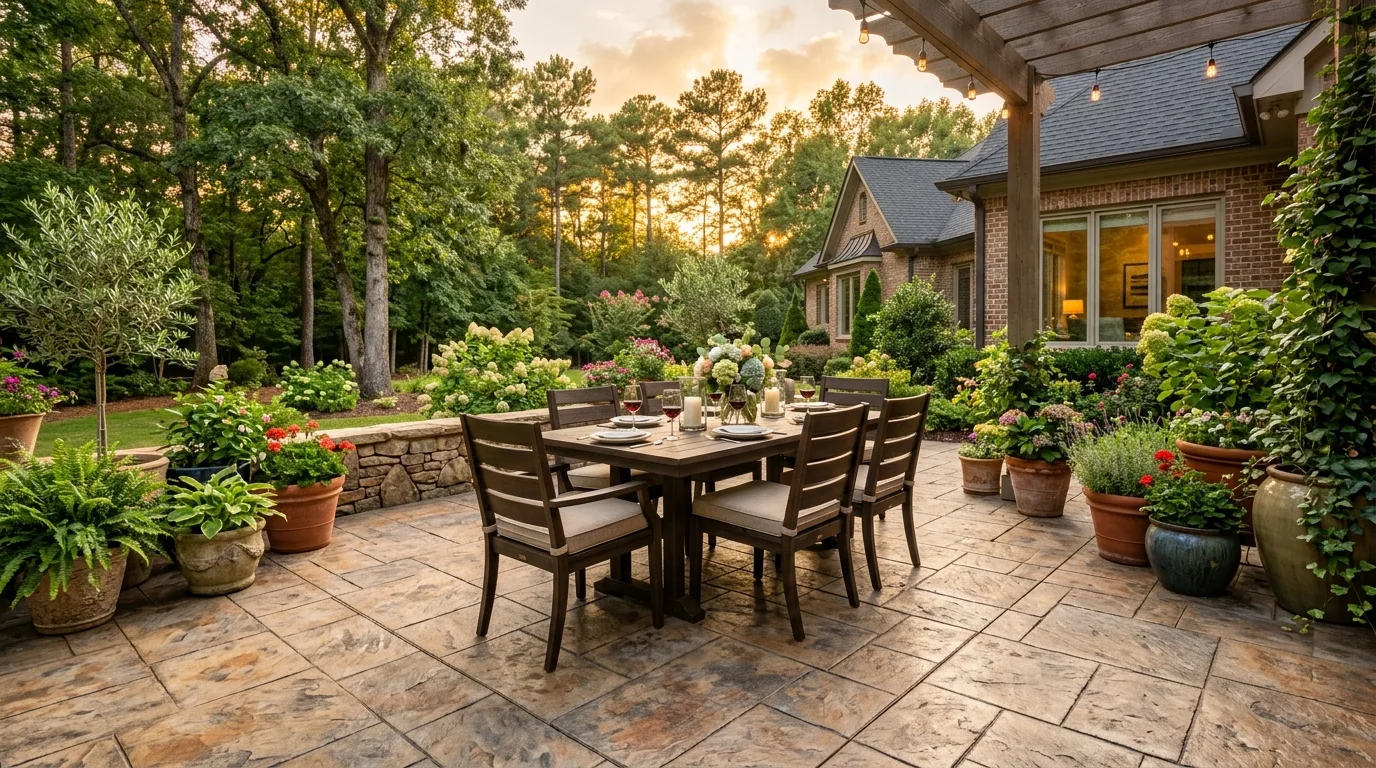
What if your Holly Springs patio could look like natural flagstone, cobblestone, or aged brick — without the maintenance nightmares that come with actual stone or pavers? That’s exactly what stamped concrete delivers, and it’s why it’s the fastest-growing patio choice in Cherokee County’s affluent north suburban communities.
In this guide, we cover the most popular stamped concrete patterns and colors for Holly Springs homes, realistic 2026 cost ranges, and the design considerations specific to Georgia’s climate and soil.
Free Stamped Concrete Estimate in Holly Springs
Pattern samples, color chips, and itemized pricing. Call Holly Springs Concrete at (888) 376-0955.
Why Stamped Concrete Matters for Holly Springs Homeowners
Stamped concrete is concrete that’s had texture and color applied before it fully cures — the result is a surface that replicates the look of natural stone, brick, or wood without the ongoing maintenance that natural materials require. For Holly Springs homeowners in communities like Cedar Valley and Crest Brooke, where landscaping and outdoor aesthetics matter to home value and neighborhood character, stamped concrete delivers a high-end result at significantly lower cost than genuine stone.
The economics are compelling: a 400-square-foot stamped concrete patio in Holly Springs runs $4,800–$7,200 installed. The equivalent patio in natural flagstone runs $12,000–$20,000 installed, with ongoing maintenance costs (restabilizing loose stones, treating organic growth between joints, resetting settled sections) that stamped concrete doesn’t have. Stamped concrete has a single maintenance requirement: resealing every 3–5 years to maintain color vibrancy and surface protection, costing $1–$2 per square foot.
Types / Options: Stamped Concrete Patterns and Finishes
Cobblestone pattern: The most popular choice in Holly Springs — particularly in Barrett Farms and Creekwood where traditional neighborhood aesthetics are common. Cobblestone stamps replicate the look of old-world European paving stones with rounded edges and slight variation in each “stone” shape. Works beautifully in earthy tones (sandstone, antique buff, charcoal) that complement Georgia’s natural landscape palette.
Slate and flagstone pattern: A natural, irregular look that blends with wooded Cherokee County settings. Large-format slate stamps create a sophisticated outdoor living room feel. Available in gray, brown, and rust-tone colorways that complement brick or stone home exteriors common in north Cherokee County.
Ashlar cut stone: More formal than flagstone, ashlar patterns feature precise rectangular stones arranged in a staggered pattern. Popular for outdoor dining spaces and covered patio areas in higher-end Holly Springs communities. Pairs well with traditional and craftsman-style homes.
Wood plank pattern: Realistic wood grain textures in long plank format — popular for covered patios and outdoor kitchen areas where the look of wood without the maintenance appeals. Warm honey or driftwood gray colorways are the most requested in Holly Springs.
Exposed aggregate: Not stamped, but decorative — the surface paste is washed away to reveal natural stone within the concrete mix. Creates a natural, slip-resistant texture with no seam lines. Ideal for pool surrounds and driveways where a more understated look is preferred.
Practical Uses: Where Stamped Concrete Works Best in Holly Springs
Outdoor living rooms and entertaining spaces: The most popular application — a 400–800 sq ft patio behind the home with stamped slate or cobblestone pattern creates a functional, beautiful outdoor room. Cherokee County’s mild spring and fall weather makes outdoor entertaining a major part of Holly Springs’s lifestyle, and a well-designed stamped patio becomes one of a home’s most-used spaces.
Pool surrounds and decks: Stamped concrete around a pool provides the sophisticated look of tile or natural stone with better slip resistance and heat-reflective properties. Lighter colorways (buff, cream, sandy tan) reflect more heat than darker patterns, which matters in Georgia’s summer where barefoot comfort on the deck is a real consideration.
Front entry and walkways: Stamped concrete from the driveway to the front door in a cobblestone or slate pattern dramatically upgrades curb appeal in neighborhoods like Barrett Springs. Combines well with stamped or exposed aggregate driveways for a cohesive exterior look.
Fire pit areas and outdoor kitchens: Stamped concrete withstands heat from fire pits better than pavers (no loose stones or shifting joints) and creates a defined, attractive zone for outdoor cooking and gathering. Circular stamp layouts around a central fire pit feature are a popular design choice in Holly Springs.
Side-yard pathways: Connecting backyard spaces to garage entries or side gates with stamped stepping stone or flagstone concrete paths adds both function and visual continuity to the property.
How It Works: The Stamping Process for Holly Springs Projects
Timing is everything in stamped concrete. The stamps must be applied while the concrete is in a specific window of plasticity — firm enough to hold the impression but soft enough to accept the texture cleanly. In Holly Springs’s spring and fall (our preferred stamping seasons), this window is typically 2–4 hours after the pour. In summer heat (90°F+), that window can compress to 1–2 hours, which is why we use evaporation retardants and schedule morning pours for summer projects.
Color is applied first — either as integral color mixed into the concrete before the pour, or as color hardener broadcast onto the fresh surface immediately after screeding. Color hardener creates a denser, more vibrant color at the surface layer. Release agent is then applied to prevent stamps from sticking. Stamps are pressed into the concrete in sequence, with careful alignment and pressure to create consistent pattern repetition. After initial set, hand tools detail the joints and edges.
After the concrete reaches initial strength (24 hours), the surface is cleaned and a UV-stable acrylic sealer is applied. This sealer is the key to color longevity in Georgia’s intense sun. Reapplication every 3–5 years maintains protection and keeps the surface looking fresh.
Stamped Concrete Design Consultation — Holly Springs
We bring pattern samples and color chips to your free estimate. Call (888) 376-0955 to schedule.
Cost Factors for Stamped Concrete in Holly Springs
Stamped concrete in Holly Springs runs $10–$18 per square foot installed. A 400-square-foot patio costs $4,000–$7,200; a 600-square-foot patio costs $6,000–$10,800. Exposed aggregate runs $8–$12 per square foot. These ranges reflect current Cherokee County labor and material costs.
The main variables within this range: pattern complexity (single-stamp patterns cost less than multi-stamp or custom designs), number of colors (single color is less than two-tone or accent work), curved vs. straight edges (curves require more formwork and hand-tool detail work), and site conditions (demo of existing pavement adds $2–$4/sq ft). UV sealer adds $0.50–$1.50 per square foot.
Frequently Asked Questions
How long does stamped concrete last in Holly Springs GA?
Well-maintained stamped concrete in Holly Springs lasts 25–40 years. The Georgia sun is more aggressive than in northern states, so sealing every 3–5 years (not every 7–10 as you’d find in northern climate guides) is critical for color retention. The base prep matters equally — a stamped patio on compacted gravel over properly drained Cherokee County soil lasts decades longer than one on clay without drainage consideration.
How do I maintain stamped concrete in Georgia’s climate?
Reseal every 3–5 years with a UV-stable acrylic sealer — Georgia’s sun fades color faster than in cooler climates. Sweep regularly to prevent organic debris from staining the surface. Promptly clean oil or chemical spills. Avoid de-icing salts in winter (rare in Holly Springs, but worth noting). For detailed maintenance, see our concrete maintenance guide for Georgia’s climate.
Can stamped concrete be repaired if it cracks?
Yes — small cracks can be filled with color-matched caulk and the area resealed. The challenge is that repairs to stamped concrete are visible if the color match isn’t perfect. Major repairs (replacing a section) require matching existing color and pattern, which is difficult years after the original pour when color has faded and patterns have been sealed multiple times. This is one reason why proper base engineering matters so much for stamped concrete — preventing cracks is far simpler than repairing them attractively.
Related: