
Holly Springs Driveway: Repair or Replace? A Clear Guide
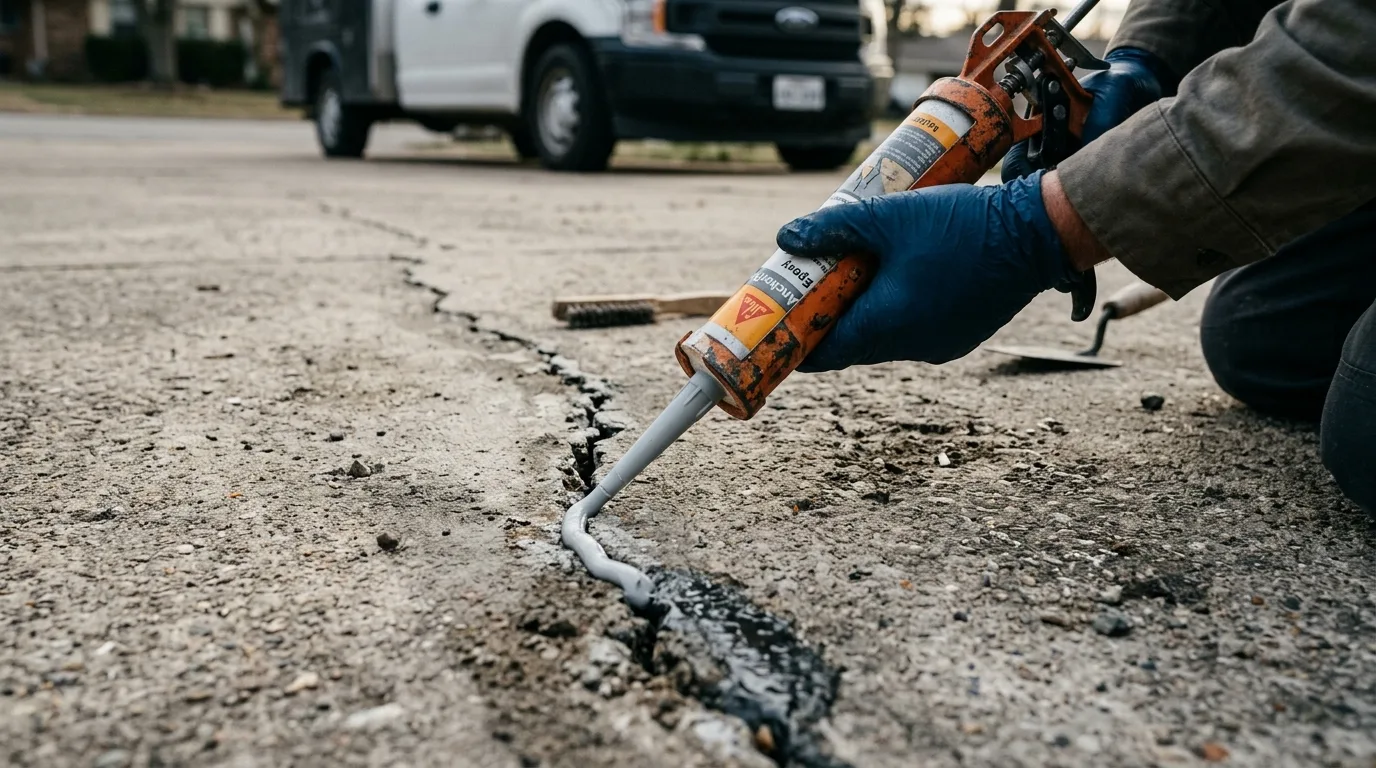
You’ve got cracks in your concrete driveway. Maybe they appeared after last summer’s heat, or maybe they’ve been there for years and are slowly getting worse. The question you’re facing is the one every Holly Springs homeowner eventually asks: repair it, or replace it?
In this post, we give you a clear decision framework based on the specific failure modes most common in Cherokee County’s red clay environment — so you can make an informed choice before you call a contractor.
Free Concrete Assessment in Holly Springs
We'll tell you honestly whether repair or replacement makes sense for your driveway. Call (888) 376-0955.
Why This Decision Matters for Holly Springs Homeowners
The repair vs. replace decision is more financially significant than many homeowners realize. A full concrete driveway replacement in Holly Springs runs $2,400–$4,200 for a standard two-car driveway. A comprehensive repair (crack filling, resurfacing overlay) might cost $800–$2,000 for the same area. But a repair on a driveway that actually needs replacement is money spent twice — you’ll be replacing it within 2–4 years anyway.
In Cherokee County specifically, the underlying cause of driveway damage matters as much as the visible symptoms. Red clay soil movement is responsible for the majority of concrete failures in Barrett Farms, Crest Brooke, and similar neighborhoods — and a surface repair that doesn’t address the clay-driven drainage or settling issue that caused the cracking will fail on the same timeline as the original damage.
Types / Options: What Repair Actually Fixes
Crack filling: Works well for isolated cracks under 1/4 inch wide that haven’t moved significantly over time. Flexible polyurethane or epoxy fills prevent water infiltration and stop widening. If the crack is stable (not actively growing), filling extends the slab’s life meaningfully. If the crack is widening due to ongoing clay movement beneath it, filling is temporary — the crack reopens as the slab continues to move.
Spall repair: Works for surface delamination — areas where the top layer of concrete has flaked off due to UV exposure, freeze-thaw cycles, or salt damage. Polymer-modified mortar rebuilds the surface layer. Effective when the underlying slab is structurally sound and drainage is functional. Doesn’t address structural or base issues.
Resurfacing overlay: A 1/4-to-1/2-inch bonded overlay applied over the entire driveway surface. Restores appearance, hides cosmetic cracks, and adds a fresh protective layer. Effective when the existing slab is structurally sound (no through-cracks, no settled sections, no void beneath the slab), the sub-base is stable, and drainage is functional. The overlay moves with the existing slab — if the base is unstable, the overlay will crack in the same pattern.
Mudjacking: Pumps grout beneath settled sections to lift them back toward their original elevation. Effective for specific settled sections where the concrete slab itself is intact but a void has formed beneath it. Common in Holly Springs for garage aprons and patio sections that have settled at the edges. Costs less than replacement for individual sections.
Practical Uses: When Repair Makes Sense
Hairline to moderate surface cracks (under 1/4 inch) in an otherwise sound driveway: Filling and sealing buys significant additional life without the cost of replacement. If the driveway is under 20 years old and only 10–20% of its surface area is cracked, repair is the right call.
Isolated spalling from a single deicing salt application or tree drip: Localized surface damage on a structurally sound slab in Cypress Springs or Creekwood responds well to patch repair and resealing. The key is that the damage is surface-only, not structural.
One or two settled sections on an otherwise intact driveway: Mudjacking two sections while leaving the rest intact can cost $600–$1,200 vs. $2,400–$4,200 for full replacement. Makes economic sense when the settled sections are the only problem.
A newer driveway (under 15 years) that has been damaged by a specific event: Tree removal that exposed roots, a heavy vehicle that cracked a section, or frost damage from an unusually severe Georgia winter — these isolated, cause-identifiable problems respond well to targeted repair.
How It Works: The Replacement Decision
Replacement becomes the right choice when repair won’t last — specifically when the damage is widespread, structural, or driven by an ongoing root cause that repair doesn’t address.
Replace when: cracks cover more than 30–40% of the driveway surface; multiple sections have settled more than 1 inch; through-cracks (full depth) are widespread; the slab is flexing underfoot (indicating voids beneath); the driveway is more than 25–30 years old with significant surface degradation; or the underlying drainage issue cannot be corrected without full removal.
In Holly Springs, the drainage indicator is particularly important. If water is pooling on the driveway surface after Cherokee County’s summer storms, or if the driveway drains toward the garage or house foundation, these drainage issues need correction — and correcting them properly requires removing the slab, regrading, and installing new concrete with proper slope. A resurfacing overlay doesn’t fix drainage; neither does crack filling.
Honest Repair vs. Replace Assessment — Holly Springs
We assess your specific driveway situation and tell you what actually makes sense. No upselling. Call (888) 376-0955.
Cost Factors for the Repair vs. Replace Decision
Repair costs in Holly Springs:
- Crack filling (per linear foot): $3–$8/ft
- Spall patch (per sq ft): $3–$8/sq ft
- Mudjacking (per settled section): $300–$800
- Full resurfacing overlay (per sq ft): $2.50–$4.50/sq ft
Replacement costs:
- Standard broom-finish concrete driveway: $4–$7/sq ft installed
- With demo of existing concrete: add $2–$4/sq ft
A useful decision rule: if repair would cost more than 50% of replacement, consider replacement. If the driveway is over 20 years old and showing widespread cracking, replacement often provides better long-term value than repeated patching. See our full concrete driveway cost guide for Holly Springs for detailed replacement pricing.
Frequently Asked Questions
What types of driveway damage always mean replacement in Holly Springs?
In Cherokee County, these conditions point toward replacement: widespread cracking across more than one-third of the surface area; sections settled more than 1.5 inches; void beneath the slab confirmed by “drum sound” when tapped or flex underfoot; through-cracks at expansion joints that have opened more than 1/2 inch; ongoing clay movement that hasn’t stabilized. Repair in these situations treats symptoms without addressing the structural reality.
Can I repair a concrete driveway myself in Holly Springs?
DIY crack filler products work for very minor hairline cracks (under 1/8 inch) on driveways in good overall condition. Surface patch products can address small spalled areas. However, professional repair is recommended for cracks wider than 1/4 inch, settled sections requiring mudjacking, or any repair involving drainage correction. Improper repairs can seal water into the slab or sub-base, accelerating deterioration. The concrete repair service page covers what professional repair involves.
How do I know if the damage is from red clay or from something else?
Clay-driven damage in Holly Springs typically shows as diagonal or transverse cracks that follow stress patterns, often appearing 5–10 years after installation. Settlement at the perimeter (edges lower than center) often indicates clay shrinkage. Root-driven heaving appears as raised sections — often with a directional pattern following the nearby tree. Surface-only damage (scaling, spalling) without structural cracking is usually climate or maintenance-related rather than soil-driven.
Related: