
Concrete Foundations & Footings for Holly Springs Homes
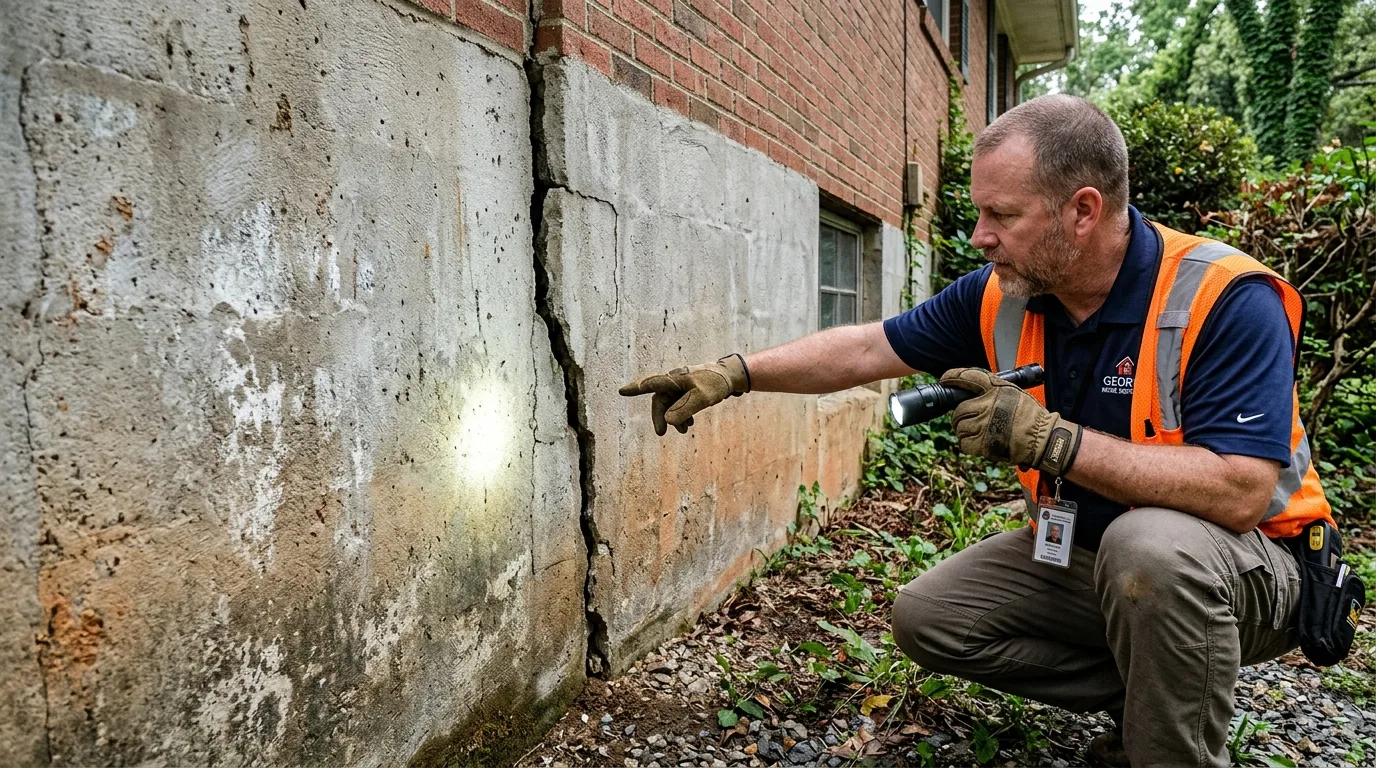
Building in Holly Springs, GA starts with the ground beneath the structure — and in Cherokee County, that ground demands careful engineering before the first yard of concrete is poured. Homeowners adding garages, workshops, or accessory structures often underestimate how much the local soil conditions affect foundation design. This guide covers what you need to know about concrete foundations and footings for Holly Springs homes and light structures.
Concrete Foundation Estimates in Holly Springs
Free written estimates based on your plans and site conditions. Call Holly Springs Concrete at (888) 376-0955.
Why Foundation Work in Holly Springs Requires Local Expertise
Concrete foundations in Holly Springs exist in a specific soil and climate context that generic construction guidelines don’t fully address. Cherokee County’s red clay soil has a plasticity index that engineering textbooks classify as “problematic” — it swells significantly when saturated and contracts as it dries. A foundation designed without accounting for this behavior will experience differential settlement: some areas dropping or rising more than others as the clay responds to seasonal moisture changes.
The Holly Springs area also sits in USDA Zone 8a, where average annual extreme minimum temperatures can reach 10°F. While Georgia winters are mild by northern standards, foundation concrete that cures during a hard freeze can lose significant strength — which is why foundation pours in December and January require careful weather monitoring and insulated curing blankets. The combination of clay movement and occasional winter risk means foundation work in Cherokee County benefits from crews who have poured concrete here through multiple seasons.
Types / Options: Foundation and Footing Systems for Holly Springs
Slab-on-grade with thickened edge footings: The most common system for residential structures in Cherokee County. A 4-inch (or thicker) concrete slab is poured monolithically with thickened edges (typically 12–16 inches deep by 12 inches wide) that serve as integrated footings. The thickened edge extends below active frost depth and provides bearing for wall loads. On Cherokee County’s clay soils, a vapor barrier and minimum 4-inch compacted aggregate base are essential before the pour.
Continuous perimeter footings with interior slab: A separate perimeter footing (typically 12 inches wide by 12 inches deep minimum in Holly Springs) is poured first, cured, and then the interior slab is poured separately. Provides more structural flexibility for additions and structures with varying wall heights. Common for garage additions in Crest Brooke and similar established subdivisions where the structure connects to existing foundation work.
Pier and beam systems: Used when grade changes require elevating the structure or where clay conditions make a conventional slab impractical. Concrete piers are drilled to reach below the active clay zone; grade beams connect the piers and support the floor system. Less common for residential in Holly Springs but used for structures on steeply sloped lots in wooded Cherokee County areas.
Pre-engineered systems (post frame, metal building): Use concrete footings or anchor piers sized to the post spacing. Holly Springs’s permit process through the Cherokee County Development Service Center or city permits requires engineered drawings for these systems.
Practical Uses: What Foundation Work Covers in Holly Springs
Garage additions: The most common foundation project in Holly Springs — 600–800 square foot single-car or 1,000–1,400 square foot two-car garages attached to existing homes. Requires permits, inspection of footings before pour, and a concrete mix design appropriate for the attached-structure load. Cherokee County’s permit process for attached structures typically requires plan review.
Detached workshops and she-sheds: Properties in Barrett Farms, Cedar Valley, and other areas with large lots frequently add detached workshops or recreational structures. Structures 120 sq ft or larger require permits. A compacted aggregate base and proper footing depth are required even for “simple” workshop slabs — the clay beneath doesn’t care about the structure’s intended use.
Accessory dwelling units (ADUs): Cherokee County has specific requirements for ADUs built on existing residential properties. Foundation design must meet residential building code, and the permit process includes plan review. A properly engineered slab-on-grade or raised foundation is required.
Commercial and light industrial foundations: Businesses near Holly Springs’s I-575 corridor often need foundation work for new construction or tenant build-outs. Commercial foundations require PE-stamped structural drawings and commercial permits.
Equipment pads and generator bases: Concrete pads for HVAC equipment, generators, or mechanical systems need proper sizing and reinforcement for equipment load. Less complex than structural foundations but still benefit from proper base preparation in Cherokee County’s clay conditions.
How It Works: The Foundation Process in Cherokee County
Every foundation project in Holly Springs begins with a site assessment. We review any existing soil reports, evaluate drainage conditions, and identify clay depth — which determines base specification. For projects requiring permits, we coordinate with the permit authority (City of Holly Springs or Cherokee County DSC) on submittal requirements.
Excavation follows: removing topsoil and native clay to the required depth for footings and slab base. In typical Holly Springs red clay sites, footings go 12–16 inches below finished grade; interior slab base prep goes 8–10 inches deep to allow for 4–6 inches of compacted aggregate plus vapor barrier plus slab thickness.
Footing forms are set, rebar is tied and set to the engineer-specified schedule, and footings are poured and inspected before backfill. After footing inspection passes, aggregate base is placed and compacted in lifts, vapor barrier is installed, and interior slab reinforcement is placed. The slab pour follows — typically a 3,500–4,000 psi mix for residential and 4,000–5,000 psi for commercial applications.
Foundation or Slab Project in Holly Springs?
Free estimates with permit guidance. We serve Holly Springs, Canton, Ball Ground, Acworth, and Cherokee County. Call (888) 376-0955.
Cost Factors for Foundation Work in Holly Springs
Standard residential slabs and thickened-edge foundations in Holly Springs run $5–$9 per square foot installed. A 24x24-foot two-car garage slab (576 sq ft) typically costs $2,880–$5,184. Separate footing and slab systems cost more per square foot due to the two-pour process. Commercial and engineer-specified systems vary significantly by design.
Key cost factors in Cherokee County: excavation depth (clay-heavy sites need more material removed), aggregate base volume, rebar density and size, vapor barrier specification, and concrete psi. Permit fees are a separate line item — Holly Springs city and Cherokee County fees for residential foundation permits typically run $100–$400 depending on project valuation.
Frequently Asked Questions
What does “footing depth” mean and why does it matter in Holly Springs?
Footing depth refers to how far below grade the bottom of the concrete footing sits. In Cherokee County, footings should extend below the “active zone” — the depth at which clay experiences significant moisture-driven movement, typically 12–18 inches. A footing that terminates in the active clay zone will move with the clay; a footing below it provides stable bearing. This is one reason cookie-cutter foundation specs don’t serve Holly Springs homeowners well.
Do I need a geotechnical report for my Holly Springs foundation project?
For residential garage slabs and small structures, a geotech report is typically not required — our experienced crew assesses site conditions as part of the estimate. For larger structures, foundations on slopes, or commercial projects, a geotechnical investigation may be required by the permit authority or by a structural engineer. We can refer you to geotechnical engineers familiar with Cherokee County’s soil profile when needed.
How long does a concrete foundation last in Cherokee County GA?
A properly designed and installed concrete foundation in Holly Springs lasts 50–100 years or more. The limiting factor in our region isn’t concrete quality — it’s sub-base preparation. Foundations that move prematurely do so because of clay-driven settlement that was preventable with proper base engineering. With correct base depth, aggregate specification, and drainage design, concrete foundations in Cherokee County are essentially permanent structures.
Related: