
Concrete Sidewalks & Walkways in Holly Springs, GA
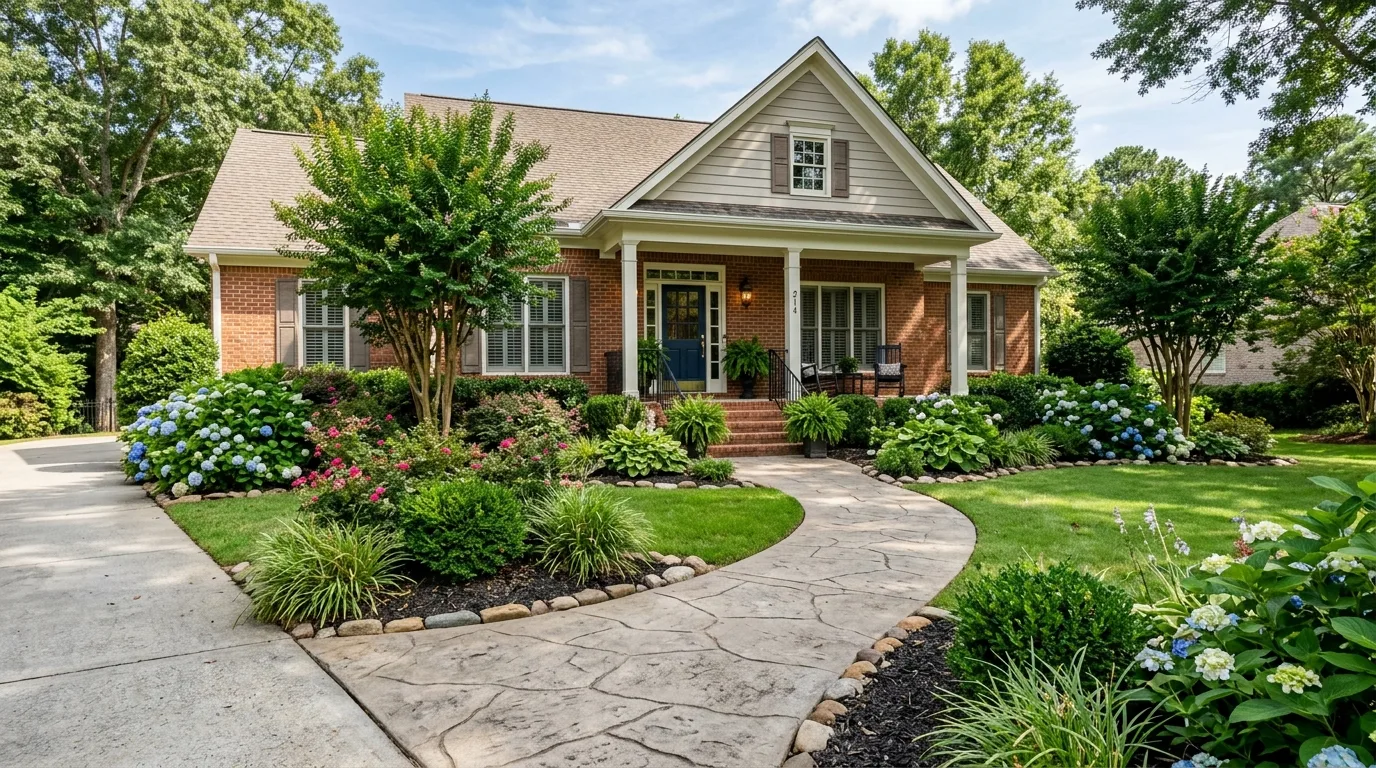
The walkway from your driveway to your front door is one of the most-used concrete surfaces on any Holly Springs property — and often one of the most neglected when homeowners plan concrete projects. Done well, a concrete sidewalk or walkway adds curb appeal, improves safety, and connects outdoor spaces with purpose. Done poorly, it becomes a trip hazard or drainage problem within a few seasons.
This guide covers concrete sidewalk and walkway installation for Holly Springs, GA homeowners — including residential paths, front entry improvements, and what Georgia’s red clay soil means for walkway design.
Concrete Walkway Estimate — Holly Springs
Free written estimates for sidewalks, front entry paths, and residential walkways. Call Holly Springs Concrete at (888) 376-0955.
Why Concrete Sidewalks Matter for Holly Springs Properties
Holly Springs’s rapid growth — with a population that’s increased 4.28% annually to over 21,000 residents — means many homes in established areas like Creekwood and Cypress Springs have aging walkways that no longer meet current expectations for appearance or safety. As home values have climbed (median household income in Holly Springs is nearly $114,000), the visual standard for exterior improvements has risen with them.
A concrete walkway project in Holly Springs typically addresses three goals simultaneously: appearance (transitioning from basic paths to stamped or exposed aggregate walkways that complement landscaping), safety (eliminating heaved sections, cracked slabs, or missing connections between outdoor spaces), and drainage (correcting paths that channel water toward the home or create ponding). In Cherokee County’s clay soil environment, all three goals require concrete that’s properly base-prepped — not just cosmetically upgraded.
Types / Options: Sidewalk and Walkway Styles
Standard broom-finish concrete: The practical baseline — a 3–4 inch slab on compacted aggregate base with broom texture for traction. Works for side-yard paths, utility connections, and anywhere function is primary. Runs $6–$9 per square foot in Holly Springs (narrower pours are slightly higher per sq ft than large flatwork due to form setup relative to poured area).
Exposed aggregate walkways: The aggregate stone within the concrete is revealed by washing the surface paste before full cure. Creates natural texture and visual interest without the cost of stamped work. Popular for front entry paths and pool surrounds in neighborhoods like Cedar Valley where a natural, landscaped aesthetic is common.
Stamped concrete walkways: Patterns (flagstone, cobblestone, slate) and color applied to match or complement existing patio or driveway work. More expensive but creates a cohesive outdoor design story. Particularly effective for front entry walkways from the street or driveway to the front door.
Brushed flagstone pattern: Stamped concrete that replicates large irregular flagstone without actual stone’s settlement and weed-growth challenges. Low-maintenance alternative to traditional flagstone stepping stones.
Practical Uses: Walkway Projects in Holly Springs
Front entry from driveway to door: The highest-visibility walkway on any property — a concrete path with stamped flagstone or exposed aggregate finish significantly upgrades curb appeal in Barrett Springs and similar communities. Standard widths of 3–4 feet accommodate comfortable two-person passage.
Side-yard paths: Connecting front driveway areas to backyard gates and patio spaces requires a durable surface that handles year-round foot traffic. Broom-finish concrete at 3 feet wide on a 4-inch aggregate base handles Cherokee County’s clay movement without settling.
Backyard patio connections: Short concrete paths connecting a garage to a backyard patio, or a patio to a pool, work well in exposed aggregate or complementary stamped patterns that integrate visually with the larger patio surface.
ADA-compliant accessible routes: Commercial properties along the I-575 corridor and community facilities in Holly Springs require accessible paths that meet Georgia Accessibility Code — specific cross-slopes, running slopes, widths, and surface texture requirements. We design and install compliant accessible routes as part of our commercial concrete service.
Removal and replacement of tree-heaved sections: Mature trees in Crest Brooke and Cypress Springs frequently heave adjacent sidewalks over time. After root mitigation (cutting or removing offending roots), we rebuild the walkway section with a geotextile fabric barrier to slow future root reentry.
How It Works: Walkway Installation in Cherokee County
Concrete walkway installation in Holly Springs follows the same base engineering principles as larger flatwork — just at a narrower scale. Excavation removes topsoil and native clay to 7–8 inches below finished grade. A 4-inch compacted aggregate base (crushed stone or crush-and-run) is installed and compacted. For walkways narrower than 4 feet, we typically use fiber-reinforced concrete rather than rebar, which is impractical at narrow widths — fiber adds comparable tensile strength distribution for paths and light-load sidewalks.
Control joints are cut or formed at 4–6 foot intervals in walkways (closer spacing than driveway joints because narrow sections are more vulnerable to through-slab cracking from tree roots or frost). After the pour and finishing, a curing compound is applied. Sealer follows after full cure.
Drainage slope is particularly important for walkways in Holly Springs. A minimum 1/4-inch-per-foot cross-slope directs water off the walking surface. Walkways that slope toward the house or run parallel to the grade without transverse slope become drainage problems that erode the sub-base over time — a common failure mode we see in older Holly Springs neighborhoods that were built before current drainage standards.
Ready to Upgrade Your Holly Springs Walkways?
Free estimates for residential sidewalks, front entry paths, and accessible routes. Call (888) 376-0955.
Cost Factors for Concrete Walkways in Holly Springs
Concrete sidewalk and walkway installation in Holly Springs typically runs $6–$12 per square foot for standard to exposed aggregate finishes. Stamped walkways run $12–$18 per square foot. The higher per-square-foot cost vs. large flatwork reflects form setup cost relative to the smaller pour volume — setting forms for a 40-foot walkway takes similar time as setting forms for a 200-square-foot patio.
Cost factors: walkway width and length, finish type, excavation depth in clay-heavy areas, whether root mitigation is needed, and whether existing walkway demo is required ($2–$4/sq ft for demo and removal). Front entry walkways with curved or non-rectangular shapes add formwork cost.
Frequently Asked Questions
How long does a concrete sidewalk last in Holly Springs GA?
A properly installed concrete sidewalk in Holly Springs lasts 25–40 years with basic maintenance. The primary threats are tree root heaving (common in established Cherokee County neighborhoods) and clay movement from inadequate base preparation. Sealing every 5 years and promptly addressing cracks before they allow water under the slab significantly extends service life. Regular inspection after Georgia’s summer storms helps catch drainage issues early.
Do I need a permit for a concrete sidewalk in Holly Springs?
Sidewalks 120 square feet or larger typically require a permit in Holly Springs. For residential front entry walkways that connect to a public sidewalk or right-of-way, additional right-of-way permits from the city may be required. In unincorporated Cherokee County, permits go through the Development Service Center. We advise on specific requirements during your free estimate. See our complete permit guide for Holly Springs for more details.
What causes concrete sidewalks to crack in Holly Springs?
In Cherokee County, the most common causes are Georgia red clay movement (shrink-swell cycle creating differential settlement), tree root pressure (particularly common in wooded neighborhoods like Barrett Farms and Creekwood), and frost heave during the rare hard freeze winters. Poor drainage that allows water to pool beneath the slab accelerates all three failure modes. Our red clay soil guide covers the soil factors in detail.
Related: